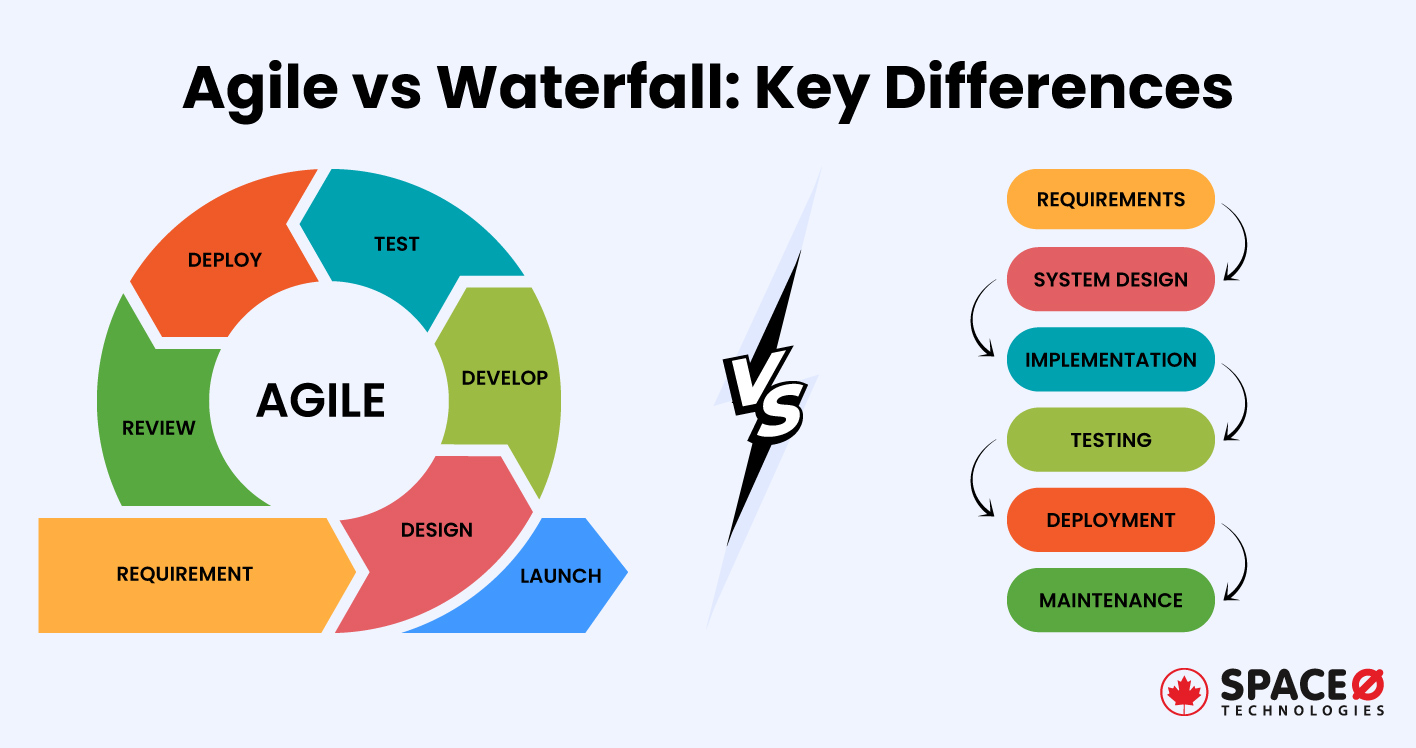
Agile (iterative cycles) vs Waterfall (sequential phases) — the two methodologies that shaped modern project management.
Is Waterfall Making a Comeback? What Is Actually Happening in 2026
Sit in on enough project kickoffs this year and you notice something that would have felt strange a decade ago. A senior engineer, sometimes a frustrated delivery manager, says out loud that maybe the team should write down what they are building before they start building it. Instead of an eye roll, the room nods.
For two decades, writing requirements up front was the cardinal sin of modern project management. Agile won the argument so thoroughly that "Waterfall" became an insult. So when planning, documentation, and phase gates start creeping back into 2026 roadmaps, it is worth asking whether Waterfall is actually making a comeback.
The honest answer is more interesting than the headline suggests.
Pure Waterfall is not staging a takeover. The strictly sequential model, finish phase one completely and never look back, is less common in 2026 than it was three years ago. PMI's Pulse of the Profession 2024 report, based on its annual global survey of project professionals, found that predictive, meaning Waterfall-style, approaches dropped from 58% of respondents in 2020 to 43.9% in 2023. That is a 24% decline. There is no sign of that trend reversing. PMI's own projections show 34% of respondents expect predictive use to decline further over the next five years.
So there is no dramatic chart showing Waterfall rocketing back to the top. That chart does not exist.
What is happening is subtler and more important. The ideas Agile told us to throw away, up front requirements, written documentation, defined phases, predictable milestones, are being quietly rehabilitated. They are showing up inside Agile teams, inside hybrid models, and inside the way thoughtful organisations plan large programmes now.
Waterfall the monolith is not back. Waterfall the toolkit never really left. And in 2026, teams are reaching for those tools again without embarrassment.
Agile (iterative cycles) vs Waterfall (sequential phases) — the two methodologies that shaped modern project management.
To understand the shift, it helps to remember how total Agile's victory was.
The Agile Manifesto landed in 2001 with four value statements. Individuals and interactions over processes and tools. Working software over comprehensive documentation. Customer collaboration over contract negotiation. Responding to change over following a plan. Within a decade those four statements went from a rebel position held by a small group of software developers to the assumed default for nearly any product or technology team.
The data fuelled the takeover. The most cited evidence came from the Standish Group's CHAOS research, which tracked software project outcomes over many years. The 2020 edition of that research reported that Agile projects had a 42% success rate compared to 13% for Waterfall projects, roughly a three to one advantage. That number became the slide that won every methodology debate for a generation.
Two things are worth noting about that evidence now.
First, the definitions matter. The Standish Group defines project success narrowly. On time, on budget, and on target. That definition structurally favours short, iterative Agile projects over large planned ones. A two week sprint that ships on time is a success. A three year infrastructure programme that delivers everything the regulator required but runs three months late is a failure, even if it is a genuine organisational achievement that no short sprint could ever have produced. The numbers are real, but they do not compare like for like situations.
Second, the Standish Group has not published a full new CHAOS report since 2020, and its figures sit behind a membership paywall, so the headline statistic is now several years old. Standish's methodology has also attracted criticism over the years, which is worth knowing before treating any single figure as definitive. The software industry it measured has changed. The teams, tools, and project types in the dataset are not the same as the ones making decisions today.
None of that means Agile did not deliver real wins, because it did. The discipline of short feedback loops, working software in front of real users, and close collaboration between builders and stakeholders genuinely improved delivery outcomes across software development during the 2000s and 2010s. But the orthodoxy hardened around a specific dataset and a specific era, and orthodoxies that hard tend to crack when reality presses back.
The crack that got the most public attention came in June 2024, when the Scottish consultancy Engprax published research claiming that software projects adopting Agile practices were 268% more likely to fail than those that did not. The study surveyed 600 software engineers in the UK and the US between May 3 and May 7, 2024, 250 in the UK and 350 in the US. A standout finding was that projects with clear requirements documented before development started were 97% more likely to succeed.
Here is the honest caveat the numbers require. The research was commissioned by Engprax to support a book called Impact Engineering, which promoted an alternative to Agile methodology developed by the same firm. The Register, reporting on the study, described it as a thinly veiled plug for that framework. The percentages are striking but not the kind of neutral, peer reviewed evidence that should settle a methodology debate on its own.
That said, the reason the study went viral is not that practitioners immediately trusted the precise figures. It is that the study named a frustration thousands of experienced people already carried.
That frustration has several distinct parts, and each one deserves its own look.
Ceremony fatigue. Daily stand ups, sprint planning, sprint reviews, retrospectives, backlog refinement, and demos can consume a real chunk of a working week. A team of eight developers running a two week sprint with full Scrum ceremonies can spend four to six hours per person per sprint on process. Roughly 5 to 8% of available delivery time, every cycle. When those ceremonies produce genuine value, that investment is worth it. When they become routine without producing change, the cost is visible and the benefit is not.
Agile as a cargo cult. Many organisations adopted the visible rituals of Agile, the board, the stand up, the story points, the velocity chart, the two week cadence, while ignoring the underlying principles. They ended up with all the overhead and none of the adaptability. The board became a status tracker. The stand up became a meeting. The retrospective became a box to tick. This pattern is sometimes called Wagile, and practitioners widely recognise it as one of the most common failure modes in enterprise Agile adoption.
The documentation problem. Working software over comprehensive documentation was never meant to mean no documentation at all. It was a statement about priority, not a licence to write nothing down. But enough teams read it as permission to stop documenting that the consequences became widespread. Key people left and took institutional knowledge with them. New team members joined and could not understand existing systems. Incidents happened and no one could trace why a particular architectural decision had been made. The documentation debt built up quietly until it became a production risk.
Remote and distributed work exposed the gaps. For most of the Agile era, the model assumed teams were physically co located. The just ask the person next to you knowledge transfer that Agile quietly depended on worked because the person was actually next to you. PMI's research finds that 61% of project professionals now work remotely at least part of the time. That informal channel is gone for a majority of the industry, and written documentation has had to fill the gap.
When those frustrations piled up at once, the reaction against Agile orthodoxy was inevitable. But what replaced it is not a return to the past.
If predictive approaches are shrinking and pure Agile is attracting criticism, something is filling the space between them. Hybrid delivery.
PMI's research found that hybrid approaches grew 57% between 2020 and 2023, going from 20% to 31.5% of respondents, even as pure predictive delivery shrank over the same period. The same research found that 76% of project professionals expect their organisation's use of Agile to increase over the next five years, and 73% expect hybrid use to increase. Meanwhile 34% expect predictive use to decline further. Hybrid has become the mainstream answer, not through any dramatic declaration, but through accumulated pragmatic choices made by delivery leads who needed both stability and flexibility in the same programme.
A typical hybrid model works like this. The project is planned predictively while the work is executed adaptively. Scope, budget, compliance requirements, and major milestones get defined up front, the Waterfall part. Then teams deliver inside that frame using sprints, boards, and iterative feedback loops, the Agile part. The project level is stable. The sprint level is flexible. Governance satisfies stakeholders who need predictability. Delivery satisfies teams who need room to learn and adjust.
This is exactly why "is Waterfall back" is the wrong question. The structure people associate with Waterfall, defined phases, up front planning, documented requirements, milestone based progress, is back. It just arrived wearing a hybrid name tag, sitting alongside sprint boards and daily stand ups, and nobody is calling it Waterfall.
One of the most important findings in PMI's research is that teams perform equally well across predictive, Agile, and hybrid approaches when they are properly trained and supported. That finding is worth sitting with. It does not say hybrid is best. It says the methodology choice matters less than execution quality. A disciplined Waterfall team outperforms a sloppy Agile team. An experienced hybrid team outperforms both when the work genuinely requires stability and adaptability together. The label has always mattered less than the discipline.
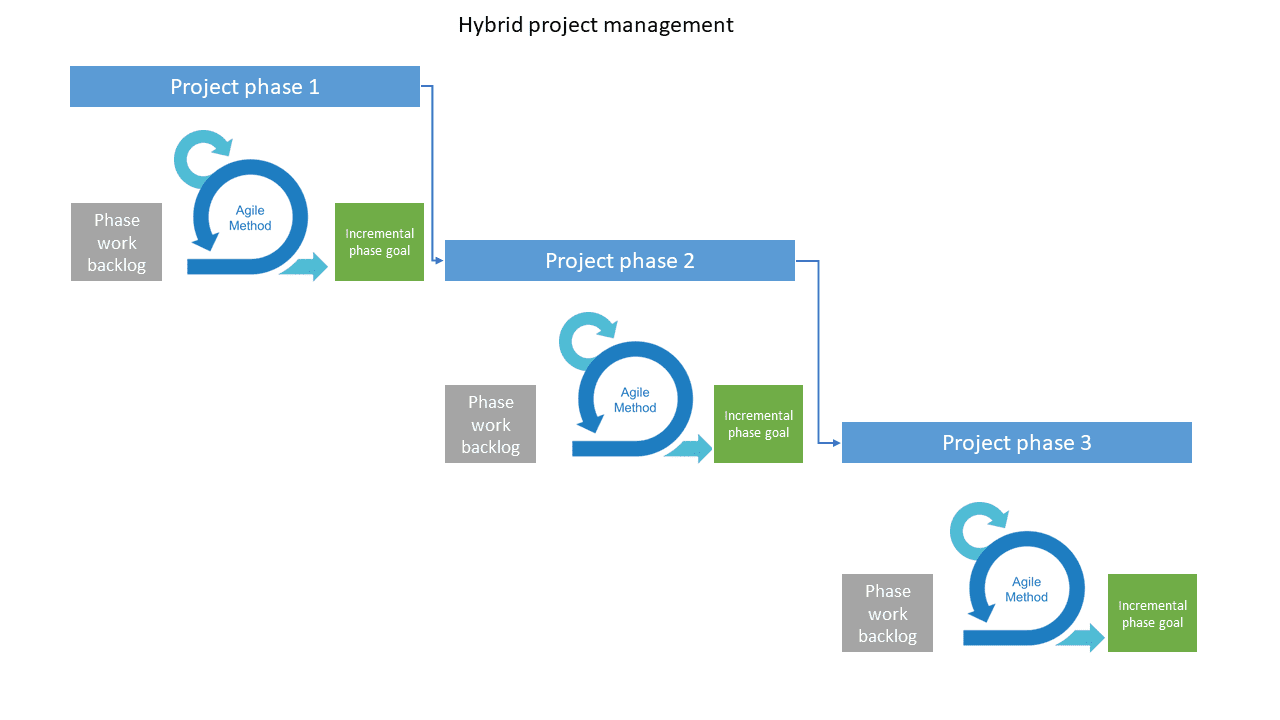
Hybrid project management: predictive phases at the programme level, Agile sprints at the delivery level.
Several specific pressures are nudging 2026 teams toward more deliberate planning. None of them is nostalgia or fashion. Each is a concrete, situational reason that applies regardless of which methodology happens to be popular.
This is the most genuinely new force, and it has changed the economics of up front planning in a way that would have been hard to predict even three years ago.
As development teams increasingly rely on AI coding assistants, GitHub Copilot, Claude Code, Amazon Kiro, Cursor and others, the quality of the output depends heavily on the quality of the input. Vague requirements produce confidently wrong code at speed. A detailed specification produces something much closer to what was intended.
Amazon's Kiro IDE, launched in July 2025, builds this principle directly into its architecture. It generates a three document specification system for every feature, a requirements file in structured EARS notation, a design document, and a task breakdown, before any code is written. The reasoning is explicit. AI agents cannot reliably fill in ambiguity, so the specification becomes the contract between human intent and machine execution.
This is a commercially significant shift. A generation of engineers who resisted writing requirements because it felt like bureaucratic overhead are now writing them because they get better code out of their AI tools when they do. DORA's research on AI assisted software development points in the same direction from a different angle. AI increases coding throughput but also increases downstream instability, which means the constraint in delivery moves away from writing code and toward everything around it, review, validation, and clarity about what the code should do. Specifications are no longer overhead relative to implementation. They are becoming the scarce resource.
The practical consequence is that "document it first," which felt like a Waterfall relic to many practitioners throughout the 2010s, now looks like an AI productivity technique. The behaviour change is happening for pragmatic reasons, but the effect is indistinguishable from what Waterfall advocates were arguing for decades.
Healthcare, pharmaceuticals, financial services, defence procurement, and payments processing have always required traceable, phase by phase documentation. Waterfall's phase gate structure maps almost perfectly onto a regulatory audit, which is why it never disappeared from these industries even during the peak of Agile enthusiasm.
PMI's industry breakdown is instructive here. Construction organisations are the most predictive segment, with 76% using predictive approaches predominantly. IT, healthcare, and financial services are the heaviest hybrid adopters, roughly in the 53 to 55% range. Financial services organisations are most likely to report using Agile frequently, at 58%, but they are also heavily represented in hybrid adoption because regulatory requirements do not go away regardless of sprint cadence.
What has changed in 2026 is that the envelope of regulation is expanding, not contracting. Data privacy legislation, GDPR, CCPA, and their equivalents in an increasing number of jurisdictions, has added compliance documentation requirements for organisations that previously had none. AI governance frameworks are emerging across the EU, the US, and Asia, requiring traceability of how AI models were developed, tested, validated, and deployed. Organisations building AI powered products now need to document model development decisions with the same rigour that medical device companies document clinical testing.
The regulated world is getting larger. And the regulated world uses structured, documented delivery processes.
When a client signs for a defined deliverable at a defined price with a defined completion date, iterative discovery is not a contractual option. "We will figure out the detailed requirements as we go" is a financial liability for both sides.
Fixed scope contracts are common in government IT procurement, in large system integrator engagements, in infrastructure projects, and in situations where the client organisation is itself subject to audit and needs to demonstrate that a defined scope was delivered for a defined budget. A multi vendor transformation spanning several countries, with a major system integrator and national business stakeholders to satisfy, cannot operate without that stability. Not because anyone is hostile to Agile, but because the coordination cost of uncertainty at that scale is too high.
In these environments, predictive planning at the programme level is a contractual requirement. The real question is not whether to plan up front but how to manage discovery and learning within the fixed envelope. The practical answer, repeated across the industry, is to use iterative methods within each phase while keeping the phase boundaries stable.
When teams sat together, knowledge lived in people's heads and moved through informal conversation. Decisions made in the corridor, context shared over lunch, institutional memory that existed because everyone had been present for the same discussions, these were informal infrastructure that made lightweight documentation feel sufficient.
That infrastructure is largely gone. PMI confirms 61% of project professionals now work remotely at least part of the time. For distributed teams spanning time zones, the informal knowledge transfer that co located Agile depended on is simply not available.
The consequences show up in specific, recurring situations. Handoffs between team members in different time zones need documentation because synchronous conversation is not always possible. Onboarding new people into ongoing projects needs written context because you cannot sit a new joiner down with the team for a week. Maintaining systems where the original developers have moved on needs traceability because no one else knows why certain decisions were made.
Teams that spent years minimising documentation are rebuilding it, not because anyone mandated it, but because the cost of not having it became impossible to ignore. The Agile principle of preferring working software over comprehensive documentation was never wrong. But it was written for a context where the team was in the same room. That context is no longer universal.
There is a leadership dimension to the shift that rarely surfaces in methodology debates but is visible to anyone who has sat in a programme steering committee recently.
Senior executives and board members, after years of iterative delivery with unpredictable timelines, are increasingly demanding the kind of predictability they can commit to externally. Promises to investors, regulators, partners, and customers require dates and budgets that can be defended. A velocity chart and a sprint burndown are useful internal tools. They are not the language of board level accountability.
This pressure flows directly into how programmes get planned. Delivery leads are being asked, sometimes for the first time, to provide a date by which a major capability will be available. "We will iterate toward it" does not answer that. It requires a forecast, which requires a plan, which requires a sufficient understanding of scope and dependencies to make the forecast credible. That is, in practice, the requirements and planning work Waterfall always mandated.
The executives asking are not hostile to Agile. They are running businesses that make external commitments, and they need a level of predictability that pure iteration does not provide without significant discipline around forecasting.
AI coding assistants like Copilot, Claude Code, and Kiro are driving a return to detailed specifications.
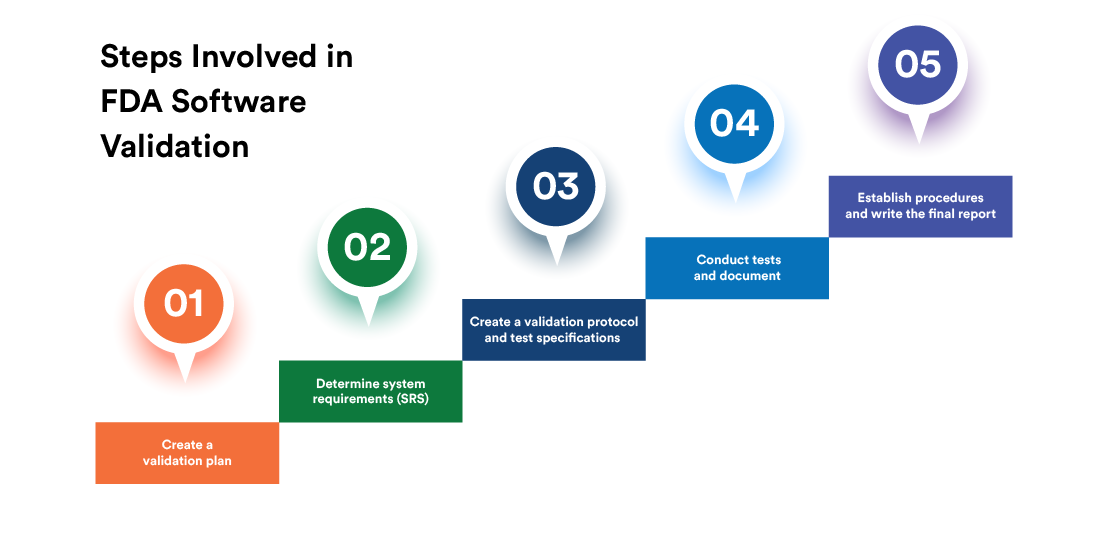
FDA software validation requires sequential, documented phases — a natural fit for predictive approaches.

Executives need dates and budgets they can defend to investors — predictability remains a board-level priority.
With 61% of project professionals working remotely, informal knowledge transfer has been replaced by written documentation.
Before this gets mistaken for a wholesale turn against Agile, it is worth being explicit about what is not happening.
Teams are not abandoning short feedback loops. The two week sprint, or something close to it, remains the dominant delivery cadence for software teams even inside hybrid programmes. The principle that you should put working software in front of real users frequently and adjust based on what you learn is not under serious challenge. It was correct in 2001 and it is still correct in 2026.
Teams are not abandoning close collaboration with stakeholders. The Agile insight that requirements cannot be fully specified up front because users do not fully know what they want until they see something is empirically true and no amount of methodology pendulum swinging changes that. Any approach that ignores it will fail.
What teams are abandoning is the dogmatic reading of Agile that treated any planning, documentation, or phase structure as a betrayal of the manifesto. The reaction is not against Agile principles. It is against Agile rituals disconnected from Agile purpose, and against the cultural pressure to perform Agile even when it did not fit the work.
The most sophisticated 2026 practitioners are not choosing between Waterfall and Agile. For each programme and each phase, they ask which mechanisms fit the actual constraints of this specific work. That question leads to hybrid answers almost every time.
Abstract methodology arguments get clearer with concrete cases.
A product team building a consumer fintech application shifted its engineering workflow in early 2026 after adopting an AI coding agent. Previously, engineers would discuss a feature in a sprint planning session, write a brief User Story, and start coding. The AI agent produced plausible output but frequently missed edge cases and made architectural assumptions that required significant rework.
The team added a specification step before any AI assisted coding begins. A product engineer writes a structured requirements document, two to four pages covering the intended behaviour, the edge cases, the error states, and the acceptance criteria, before any code is generated. The AI agent uses the document as its primary input.
The rework rate dropped significantly. More importantly, the specification documents became useful artefacts in their own right. Onboarding material for new engineers, input for QA test design, reference documentation for future changes. The team did not set out to adopt Waterfall practices. They set out to get better output from their AI tools. The result was a workflow any Waterfall practitioner from the 1990s would recognise.
A pharmaceutical company building a clinical trial management system operates under FDA regulations that require documented validation of each system component before it can be used in a live trial. The validation process is inherently sequential. Define the requirements, build the system, run validation testing against the requirements, produce the validation report. The regulator examines the report before the system goes live. There is no option to iterate after go-live and update the validation retroactively.
The development team works in two week sprints within the validation phases. They write User Stories, run sprint reviews, and hold retrospectives. But the sprint output feeds into validation evidence packs rather than directly into production. The Agile ceremonies help the team organise and pace the work. The Waterfall gate structure provides the regulatory traceability the FDA requires.
Neither element works without the other. Pure Agile cannot produce the validation evidence trail. Pure Waterfall cannot produce working software fast enough to run meaningful user acceptance testing before the formal validation window. The hybrid is not a compromise here. It is the only workable answer for this regulatory context.
The construction industry provides a useful contrast. Per PMI's industry breakdown, 76% of construction organisations use predictive approaches predominantly, the most predictive industry segment in PMI's research, even as hybrid adoption has grown across other sectors.
This is not because the construction industry is behind on methodology. It is because the work genuinely requires predictability. A building project involves dozens of contractors who all depend on each other's timelines. The electricians cannot work until the structural engineers are done. The finishing trades cannot start until the electricians are complete. An iterative "we will figure it out" approach to scheduling would create delays and cost overruns that compound rapidly through a multi year project.
Construction is also heavily regulated. Safety codes, environmental permits, and structural certifications all require documented proof that specified work was completed in a specified sequence. Phase gate documentation is not bureaucratic overhead here. It is the legal record that the building is safe to occupy.
The construction industry benchmark matters because it shows predictive delivery is not an anachronism from a pre-Agile era. It is the right methodology for a class of work that exists in 2026 just as it did in 1976, and the characteristics of that work have not changed.
Large ERP transformations have always sat awkwardly between methodologies. The scope is typically fixed by contract, the system integrator is engaged to deliver specific modules by specific dates, and the contract specifies what "done" looks like. But the detailed implementation of each module involves hundreds of decisions that cannot all be made at the start, because the business processes being modelled are complex and often only fully understood once the team begins building.
The solution most large ERP programmes have converged on is to fix the phase deliverables and the go-live dates while leaving the detailed User Stories and sprint priorities flexible within each phase. The change management process applies to phase level scope changes, not to sprint level reprioritisation. The Product Owner or Programme BA has authority to adjust stories within the phase boundary without a formal Change Request.
In practice, this arrangement looks the same on programme after programme. The go-live date is fixed at programme level, and within that envelope delivery teams work in increments with Agile ceremonies. Stories get refined at sprint level, not frozen at programme level. The distinction between "locked scope" and "locked stories" is what makes the model both governable and deliverable.
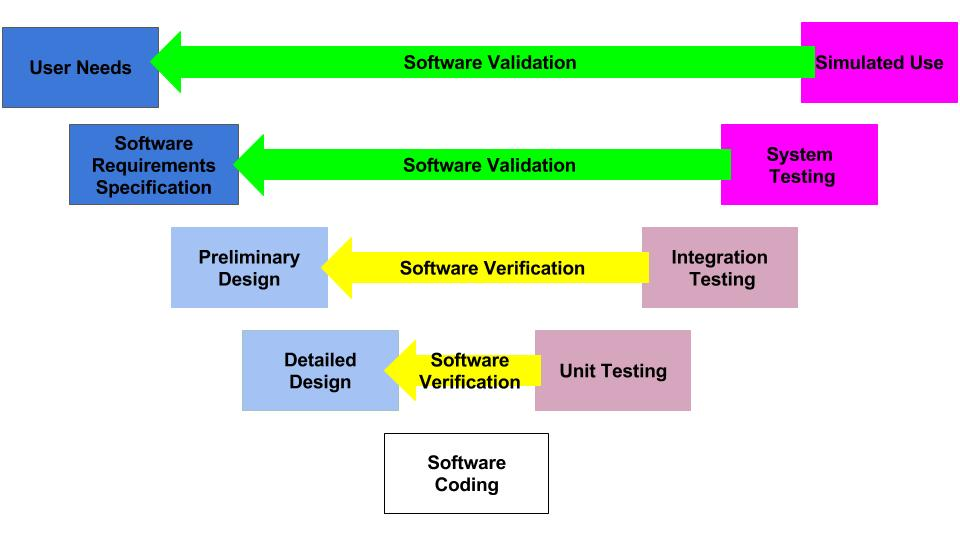
The V-model for software validation — sequential verification at each design level, with Agile sprints feeding into each phase.
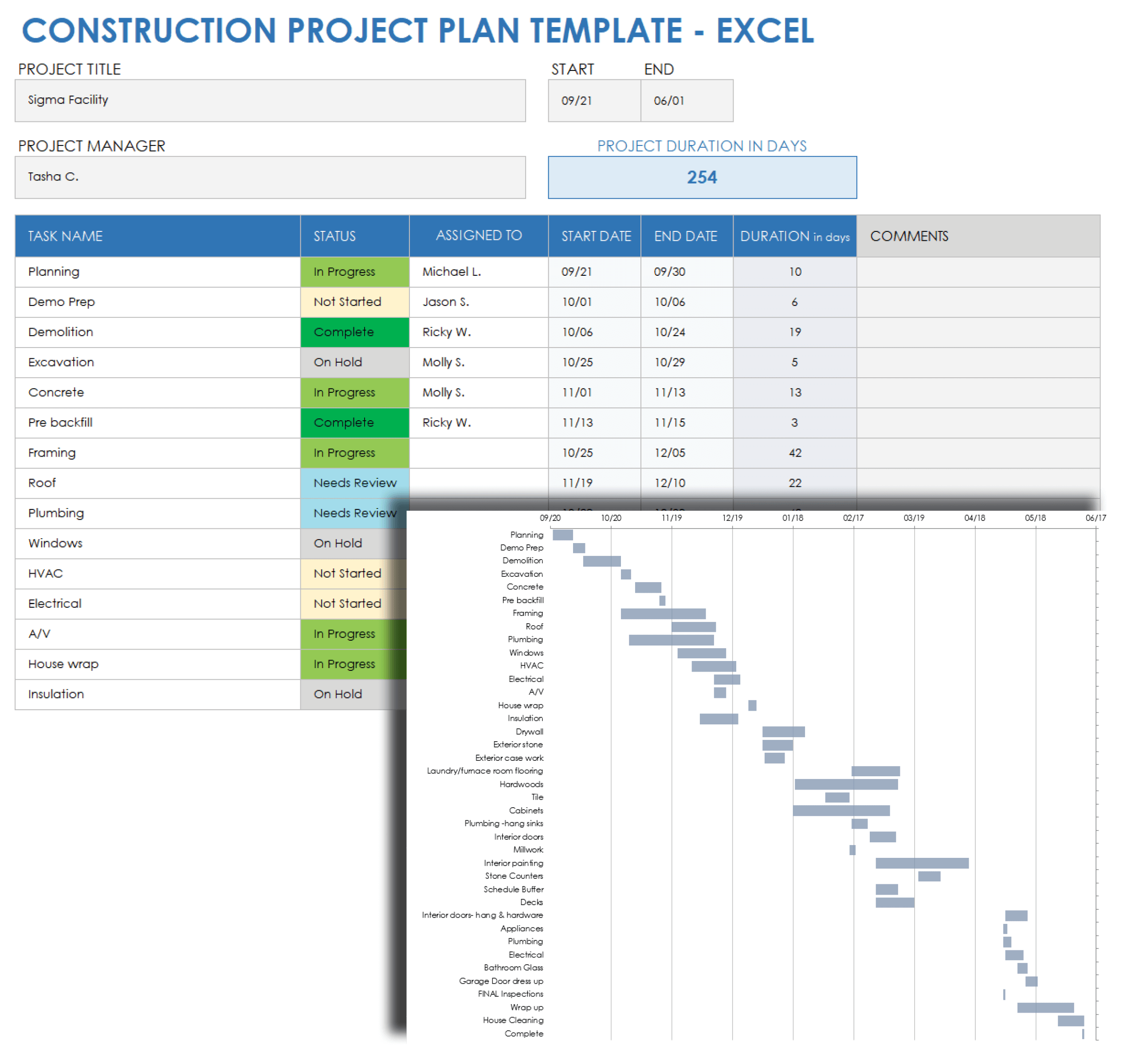
Construction projects remain predominantly predictive — contractors depend on sequenced, documented timelines.
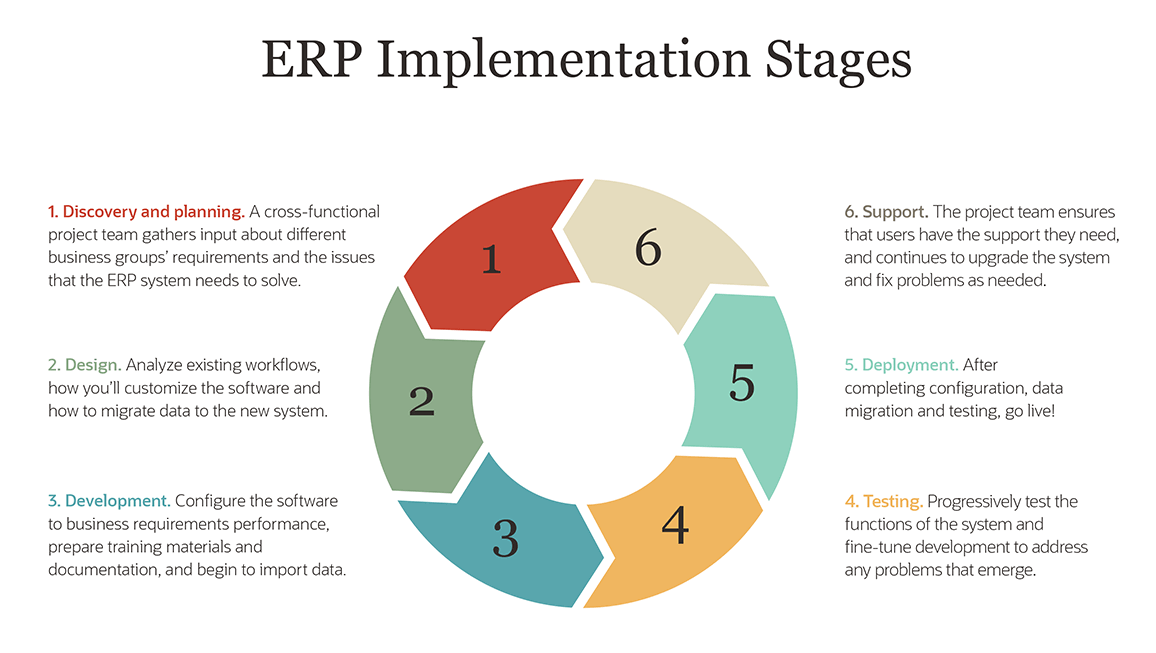
ERP implementations lock scope at programme level while keeping stories flexible within each phase.
The most useful 2026 framing is to match the methodology to the actual characteristics of the work rather than to a team identity or an organisational fashion.
Use predominantly predictive structure when requirements are stable and fully knowable before work begins, the client relationship is contractual and the deliverable is precisely defined, regulatory or audit obligations require phase level documentation and sign off, the project involves multiple contractors whose work must be sequenced, or the cost of mid project change is very high, as in physical construction, regulated products, or hardware.
Use predominantly Agile iteration when requirements will evolve because users cannot fully articulate their needs until they see something working, the team has a genuine Product Owner with decision making authority who reviews output frequently, the business can absorb and respond to feedback every two to four weeks, and there are no contractual or regulatory constraints requiring fixed phase delivery.
Use a hybrid when programme level milestones are fixed, by contract, regulation, or external commitment, but detailed requirements within each phase are uncertain. The team has some Agile experience and a programme governance structure that requires milestone accountability. Multiple vendors or teams need a shared coordination framework at programme level while retaining delivery flexibility at sprint level. Or you need to satisfy both executive level predictability requirements and team level adaptability needs at the same time. This describes the majority of large enterprise programmes.
The practical move for most 2026 teams is hybrid with a clear split between the levels. At programme level, fixed scope, fixed dates, formal change control for boundary changes, milestone reporting for executives. At delivery level, sprint planning, User Stories written late and kept short, reprioritisation within the phase boundary, working software reviewed regularly by real users.
The artefacts that support this combination are not glamorous. A clear RACI that settles who decides versus who delivers. A risk register updated when risks change, not just when governance requires it. A sprint board that reflects real work, not a performed status. A requirements document written for the team, not for the auditor. These are neither Waterfall nor Agile artefacts exclusively. They are just what organised, accountable delivery looks like.
Is Waterfall making a comeback? Not as a wholesale replacement for Agile. The PMI data is clear. Predictive approaches declined 24% between 2020 and 2023, and 34% of project professionals expect predictive use to decline further over the next five years. Anyone selling a "Waterfall is back, Agile is dead" headline is choosing a provocative frame over an accurate one.
But the underlying instinct, that planning, documentation, and structure are valuable tools rather than signs of methodological backwardness, has returned. It has returned because AI tools reward precise specifications. Because the regulated world is getting larger, not smaller. Because distributed teams cannot rely on informal knowledge transfer. Because external commitments require predictable timelines. And because a generation of teams that adopted Agile rituals without Agile discipline learned, the hard way, what the rituals were actually for.
The 2026 winner is not Waterfall. It is not Agile either. It is the team mature enough to take useful tools from both, apply them where they fit, ignore the dogma on both sides, and stay focused on what actually matters. Delivering something that works for the people who need it.
The methodology was never the point. Finishing the work was.